

Why we build these tools
Before you use anything we make, here is why we make it. A short introduction to who we are, the two products we ship, and the one rule underneath both.
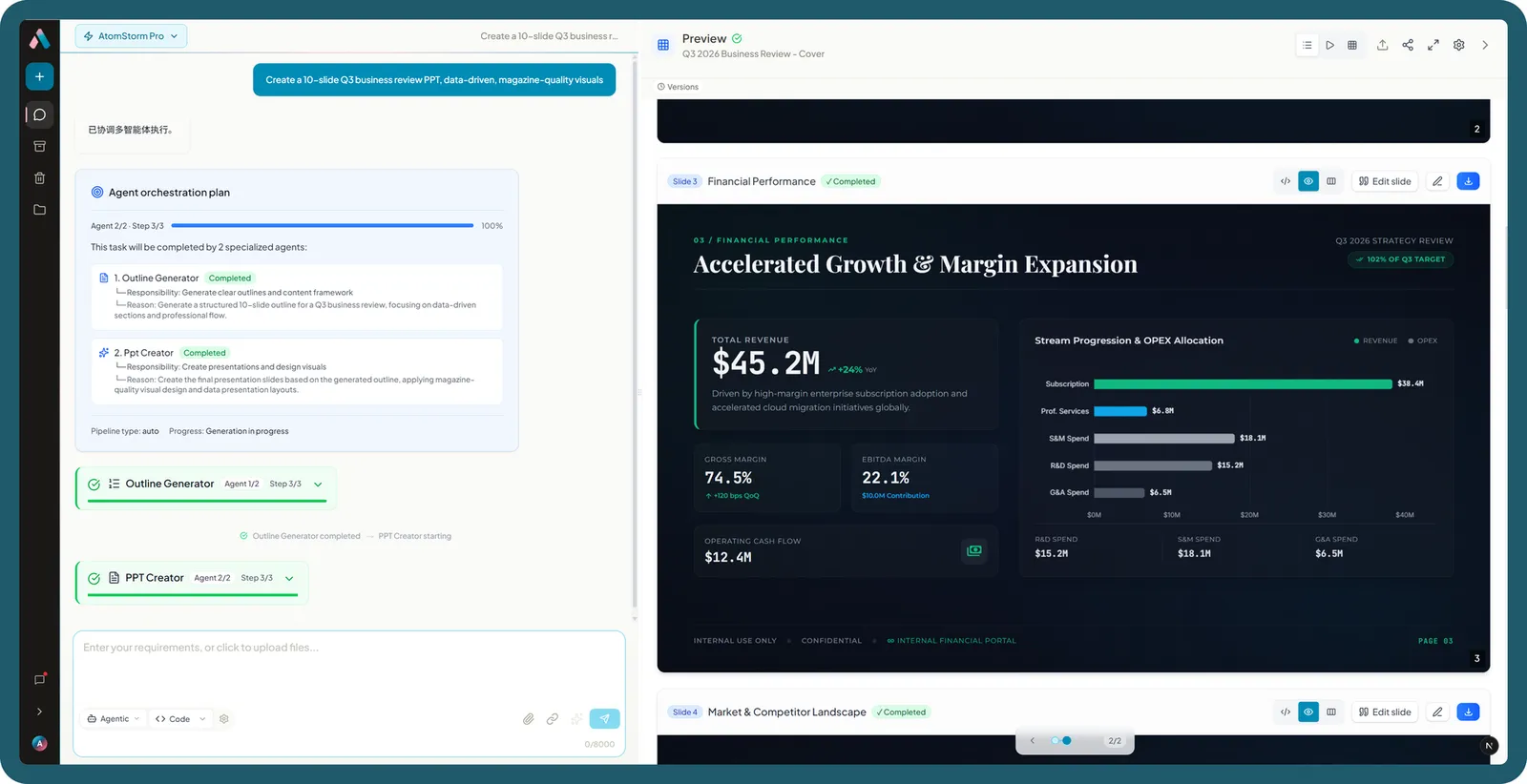
AtomStorm is a small, independent software studio. We are not a platform, a suite, or a movement. We make a short list of tools — AtomStorm Studio turns a prompt into work you can still edit, Atlas cleans up a Mac and lets you undo any step — and we try to make each one well enough that you forget it is there while you work.
This is the first thing we have written here, so it is worth saying plainly what the studio is for.
Two products, one workshop
Today the catalog is two lines long.
AtomStorm Studio turns a prompt into work you can still edit. You describe what you need — a deck, a poster, a report, a resume — and it produces an editable HTML container, then shapes that container into the format you asked for. Export to PPTX, PDF, or an image when you are done. The point is not the generation; plenty of tools generate. The point is that the source stays yours to change, so the machine's first draft is a starting line, not a wall.
Atlas is an open-source maintenance workbench for the Mac. It cleans up a machine the way a good mechanic works on a car: it tells you what it is about to do before it does it, and it lets you undo it afterward. Nothing runs that you did not read first, and nothing is gone that you cannot get back.
The two products look unrelated — one makes documents, one tends a laptop — but they come from the same idea.
The rule underneath both
Software should show its work.
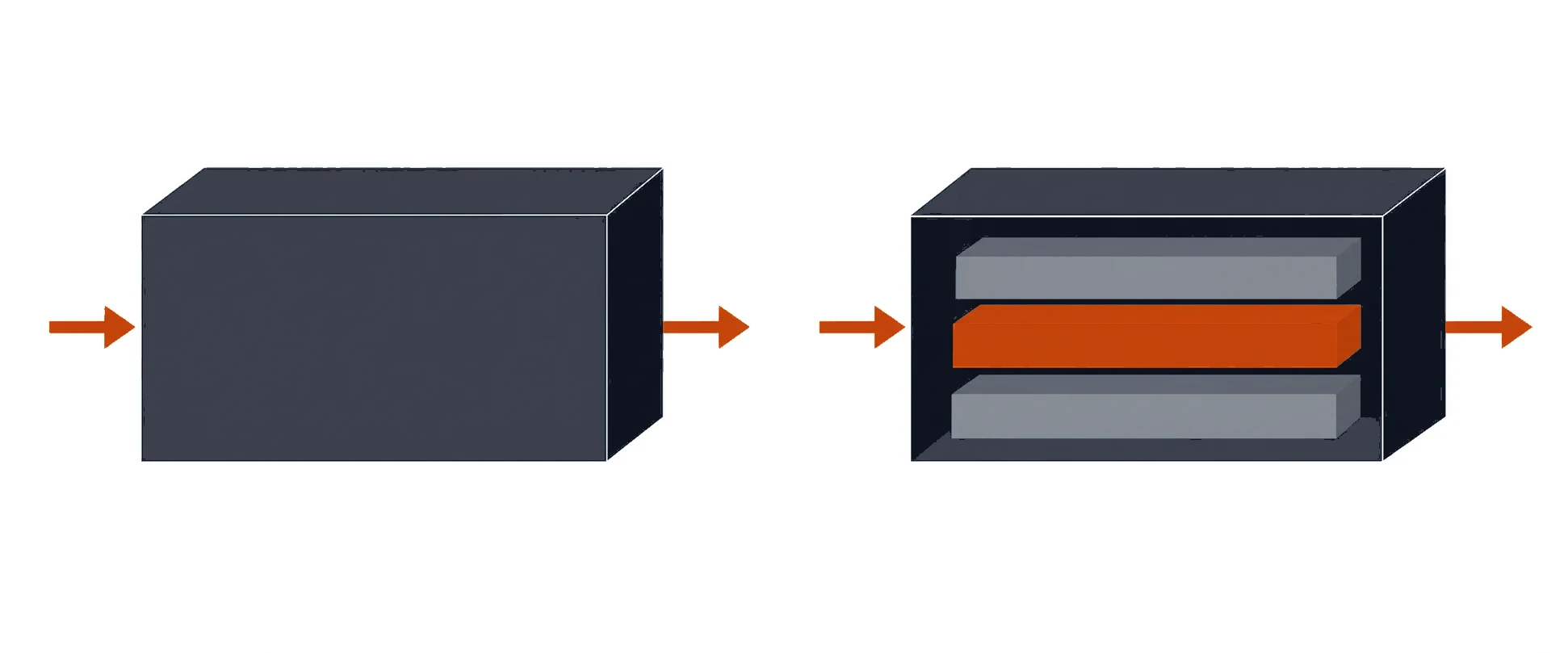
Most tools ask for trust up front and hand you a result you cannot inspect. A slide deck you cannot restyle. A cleanup that already happened. We think that is backwards. A tool earns trust by being legible: by letting you see what it is about to do, watch it do it, and change or reverse the outcome. That is the whole philosophy, and it is why our products give back editable sources and standard formats instead of locking you inside ours.
It is a slower way to build. Explaining every step and keeping every step reversible is more work than hiding both behind a confident surface. We think it is the difference between a tool you use and a tool you have to manage.
Why write any of this down
A studio this size does not need a content marketing engine, and this will not become one. We are keeping these pages for a narrower reason: to write down the decisions behind the tools while they are still fresh, so the reasoning does not evaporate into a changelog.
Expect posts about the specific choices — why an export keeps the styles it keeps, why a cleanup is staged the way it is, what we got wrong and changed. If that is the kind of thing you like reading, you are in the right place. If you just want the tools, the catalog is one click away, and both products are live.
We would rather you stay because the work is good than because leaving is a chore. That goes for the software, and it goes for this page too.
Related reading
Lock-in has a file format
Vendor lock-in is usually discussed as a pricing or contract problem. In practice it arrives as a file you cannot open anywhere else.
The export is the product
Most AI presentation tools hand you a picture of a slide and call it a deck. This is what we learned rebuilding our PowerPoint export twice.
Explainable by default
Choosing a Mac cleanup tool? Atlas runs under one constraint, every action explainable before it runs, recoverable after.